Physics 101 Virtual Laboratories
Experience Physics like never before
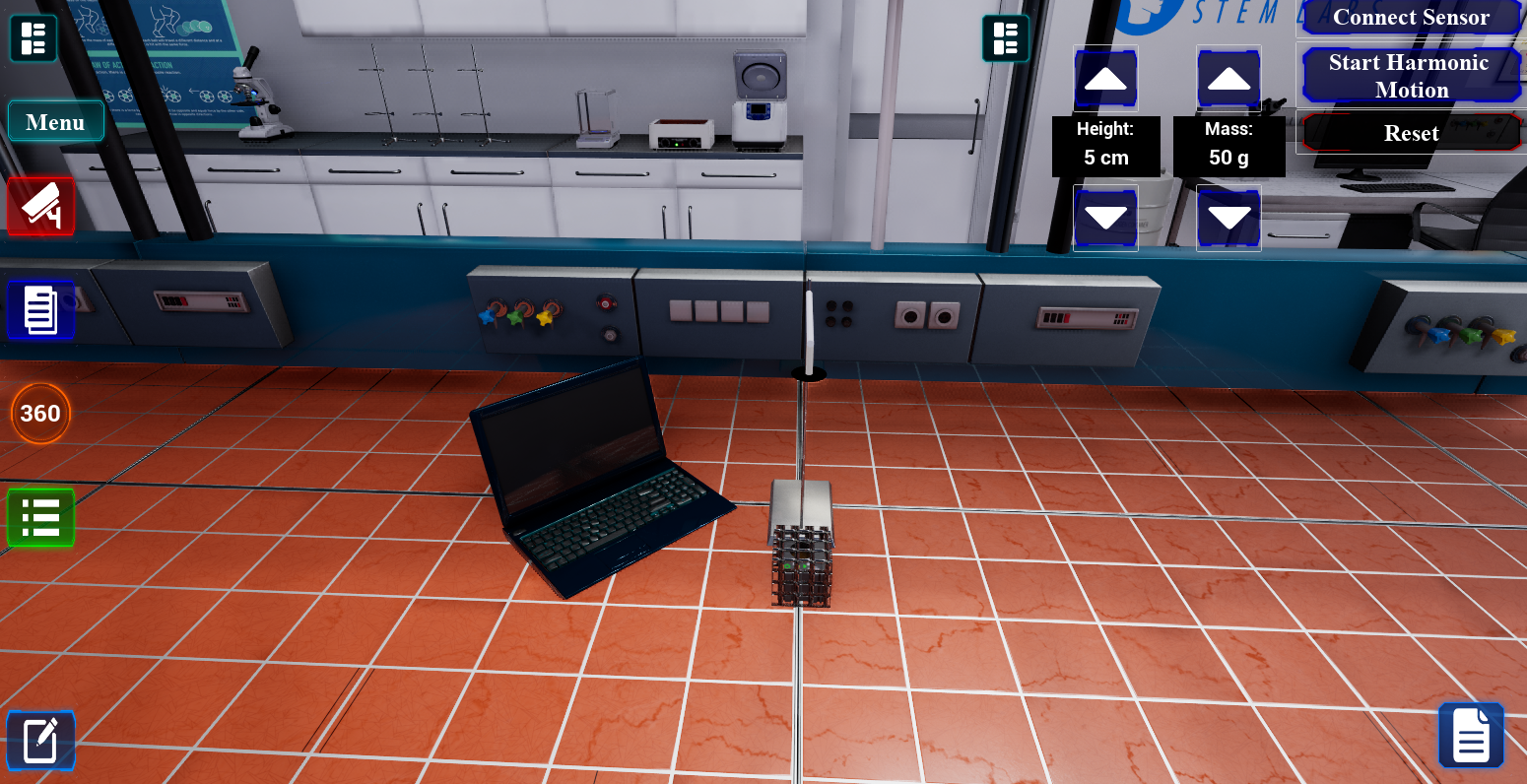
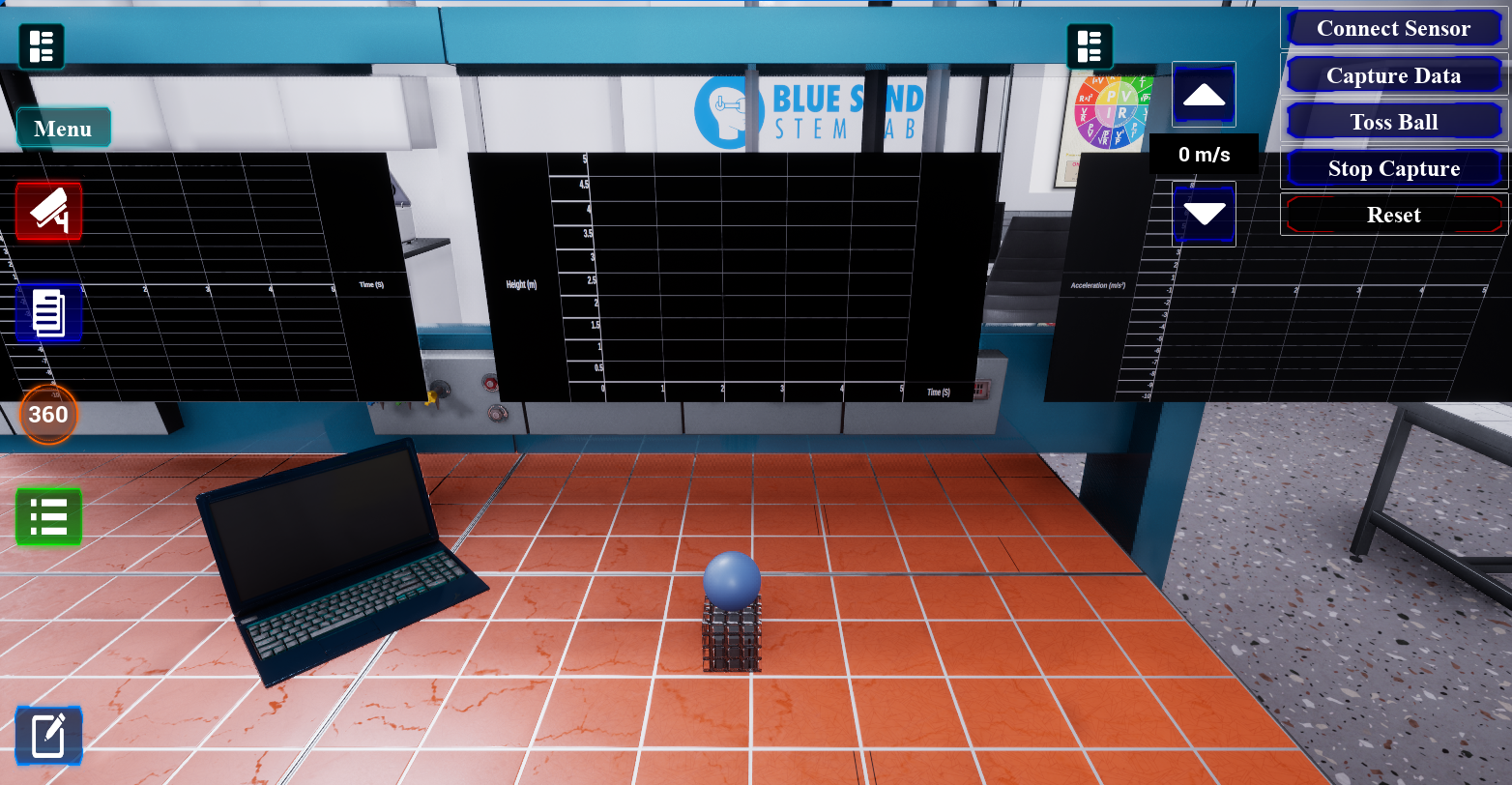
Our virtual laboratories provide students with immersive, hands-on science experiences without the limitations of physical lab spaces. Access cutting-edge experiments and simulations 24/7 from any device.
Each virtual lab is designed by experienced educators and scientists to align with curriculum standards while providing interactive learning opportunities that engage students in authentic scientific inquiry.
Available Virtual Labs
Explore our comprehensive collection of STEM laboratory simulations
Physics Laboratories
Graphical Analysis of Physical Variables
Match position, velocity, and acceleration graphs to physical motion using motion detectors.
30-45 minutesOscillatory Motion Investigation
Analyze oscillatory motion and create position vs. time graphs for periodic movement.
30-45 minutesDynamics of a Cart on an Inclined Plane
Investigate acceleration on inclined planes and analyze motion using photogates.
30-45 minutesMeasuring Gravitational Acceleration on an Incline
Calculate gravitational acceleration using inclined planes and motion sensors.
30-45 minutesFree Fall Motion Using a Picket Fence
Measure gravitational acceleration using free-falling objects with photogates.
30-45 minutesVertical Motion of a Tossed Ball
Analyze vertical projectile motion using motion detectors to track thrown objects.
30-45 minutesAcceleration in Simulated Bungee Motion
Study acceleration during bungee jumping simulations with force sensors.
30-45 minutesProjectile Motion Timing with Photogates
Analyze two-dimensional projectile motion using photogate timing measurements.
30-45 minutesTrajectory Analysis with a Projectile Launcher
Investigate projectile motion using virtual projectile launchers and trajectory analysis.
30-45 minutesExperimental Study of Newton’s Second Law
Explore the relationship between force, mass, and acceleration using carts and sensors.
30-45 minutesDynamics of an Atwood Machine System
Study acceleration and tension in pulley systems with varying masses.
30-45 minutesVerification of Newton’s Third Law
Demonstrate action-reaction pairs using force sensors in collision experiments.
30-45 minutesComparative Study of Static and Kinetic Friction
Measure and compare static and kinetic friction coefficients on various surfaces.
30-45 minutesEffects of Air Resistance on Falling Objects
Investigate drag forces and terminal velocity of falling objects in air.
30-45 minutesPeriod Analysis of a Simple Pendulum
Study simple pendulum motion and factors affecting oscillation period.
30-45 minutesInvestigation of Simple Harmonic Motion
Analyze spring-mass systems and oscillatory motion characteristics.
30-45 minutesEnergy Transformations in a Tossed Ball
Track kinetic and potential energy transformations in projectile motion.
30-45 minutesEnergy Conservation in Harmonic Motion
Study energy conservation in oscillating spring-mass systems.
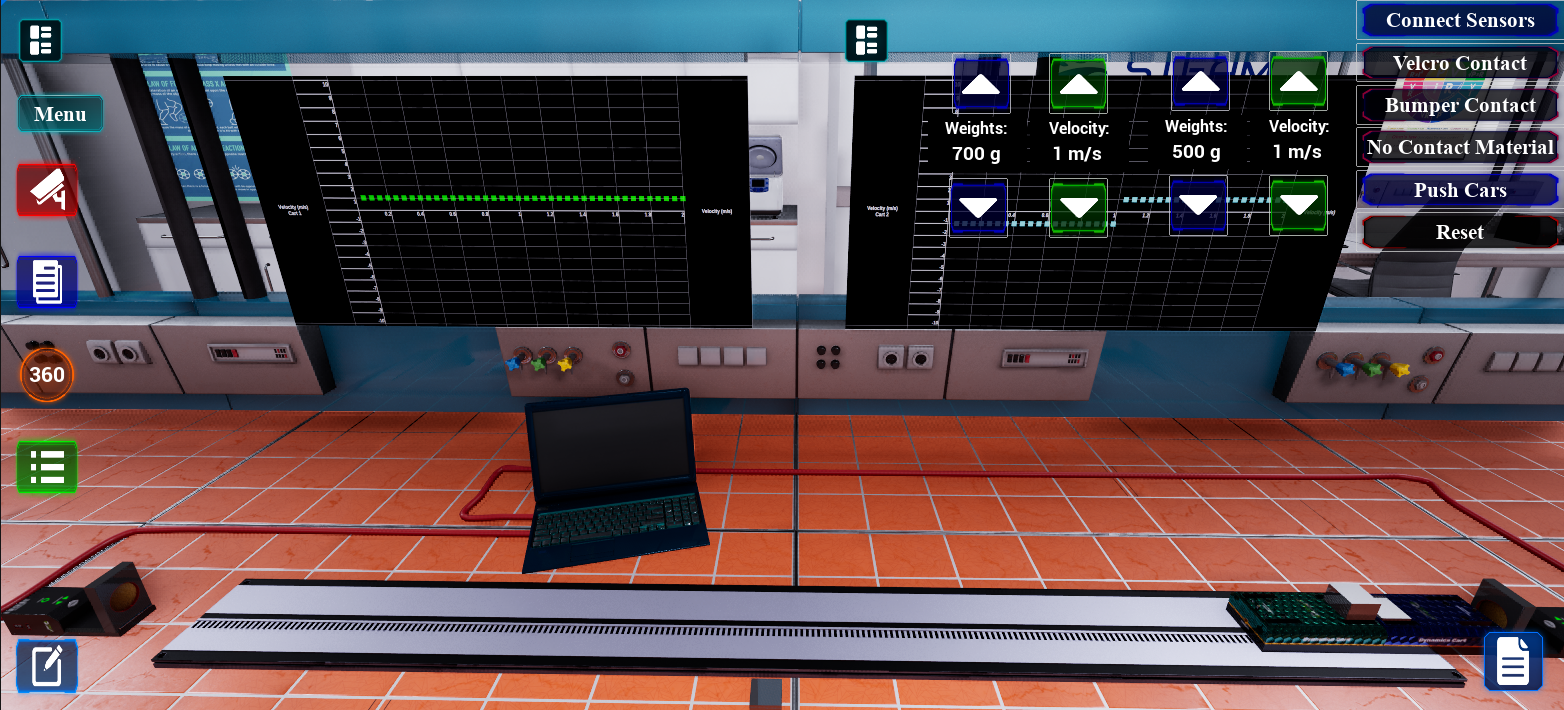
30-45 minutesCollision Analysis: Momentum and Energy
Analyze elastic and inelastic collisions using momentum and energy principles.
30-45 minutesImpulse–Momentum Relationship Study
Investigate impulse-momentum theorem using force sensors and motion detectors.
30-45 minutesCentripetal Acceleration in Rotational Motion
Study circular motion and centripetal force using rotating platforms.
30-45 minutesReal‑World Acceleration Measurements
Measure and analyze accelerations in everyday motion using accelerometers.
30-45 minutesVerification of Ohm’s Law
Investigate the relationship between voltage, current, and resistance in circuits.
30-45 minutesAnalysis of Series and Parallel Circuits
Build and analyze series and parallel circuits with virtual components.
30-45 minutesCharging and Discharging of Capacitors
Study capacitor charging and discharging in RC circuits.
30-45 minutesMagnetic Field Produced by a Current Coil
Investigate magnetic fields generated by current-carrying coils.
30-45 minutesMagnetic Field of a Solenoid Model
Study magnetic fields in solenoid configurations using virtual slinkies.
30-45 minutesElectrical Power and Energy Conversion
Explore electrical power, energy transformation, and circuit efficiency.
30-45 minutesInvestigation of Light Polarization
Investigate light polarization using virtual polarizing filters.
30-45 minutesAngular Analysis of Polarized Light
Study polarized light intensity with precise angular measurements.
30-45 minutesLight Intensity and Distance Relationship
Investigate inverse square law for light intensity with distance.
30-45 minutesExperimental Study of Newton’s Law of Cooling
Study temperature change rates and cooling curve analysis.
30-45 minutesMagnetic Field Mapping of a Permanent Magnet
Map and analyze magnetic field patterns around permanent magnets.
30-45 minutesInterference of Sound Waves and Beat Patterns
Investigate sound wave interference and beat frequency phenomena.
30-45 minutesExperimental Determination of the Speed of Sound
Measure sound velocity using resonance and timing methods.
30-45 minutesSpectral Analysis of Tones and Vowels
Analyze sound spectra of voice and musical tones using FFT analysis.
30-45 minutesMathematical Principles of Musical Harmony
Explore mathematical relationships in musical scales, intervals, and harmonics.
30-45 minutes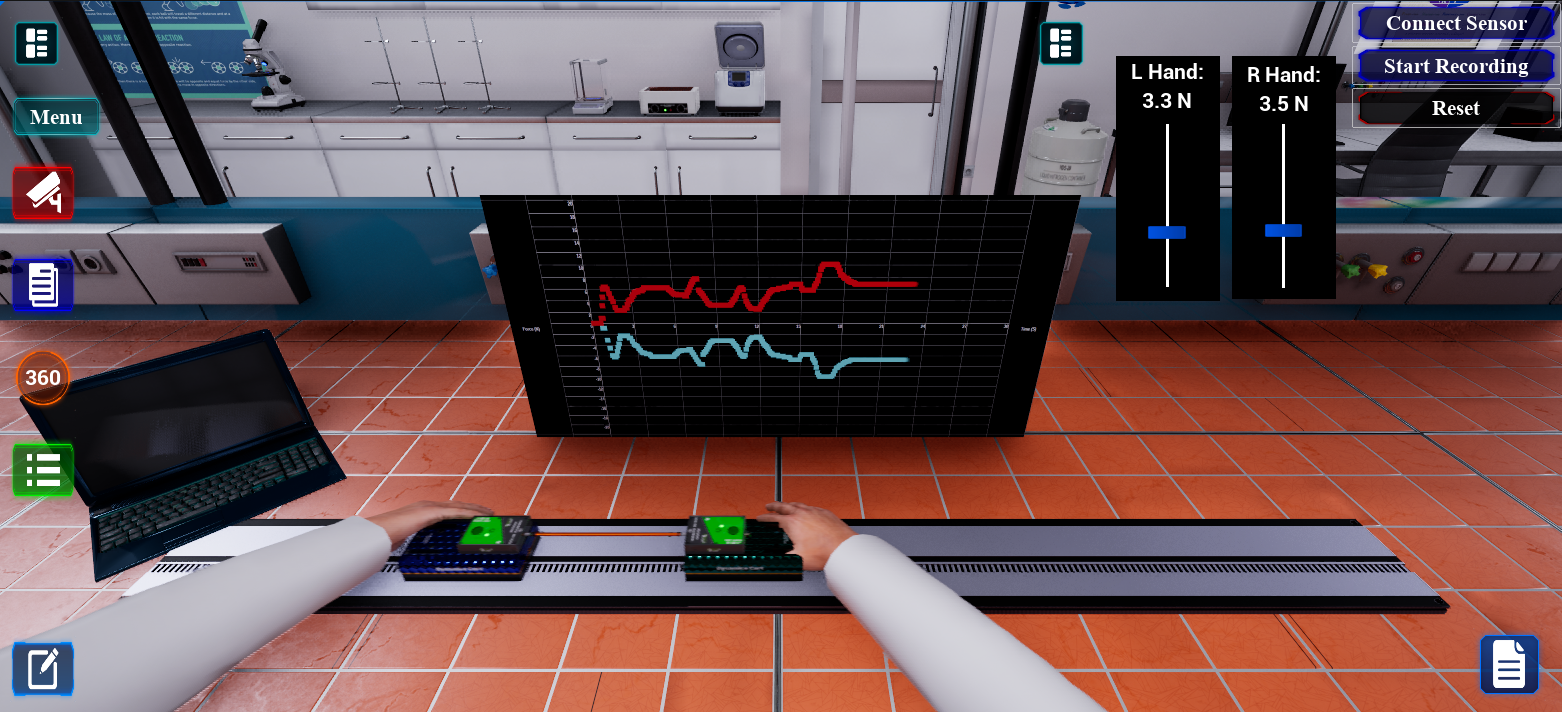
Interactive Learning
Students engage with realistic lab equipment and procedures
Real-time Data
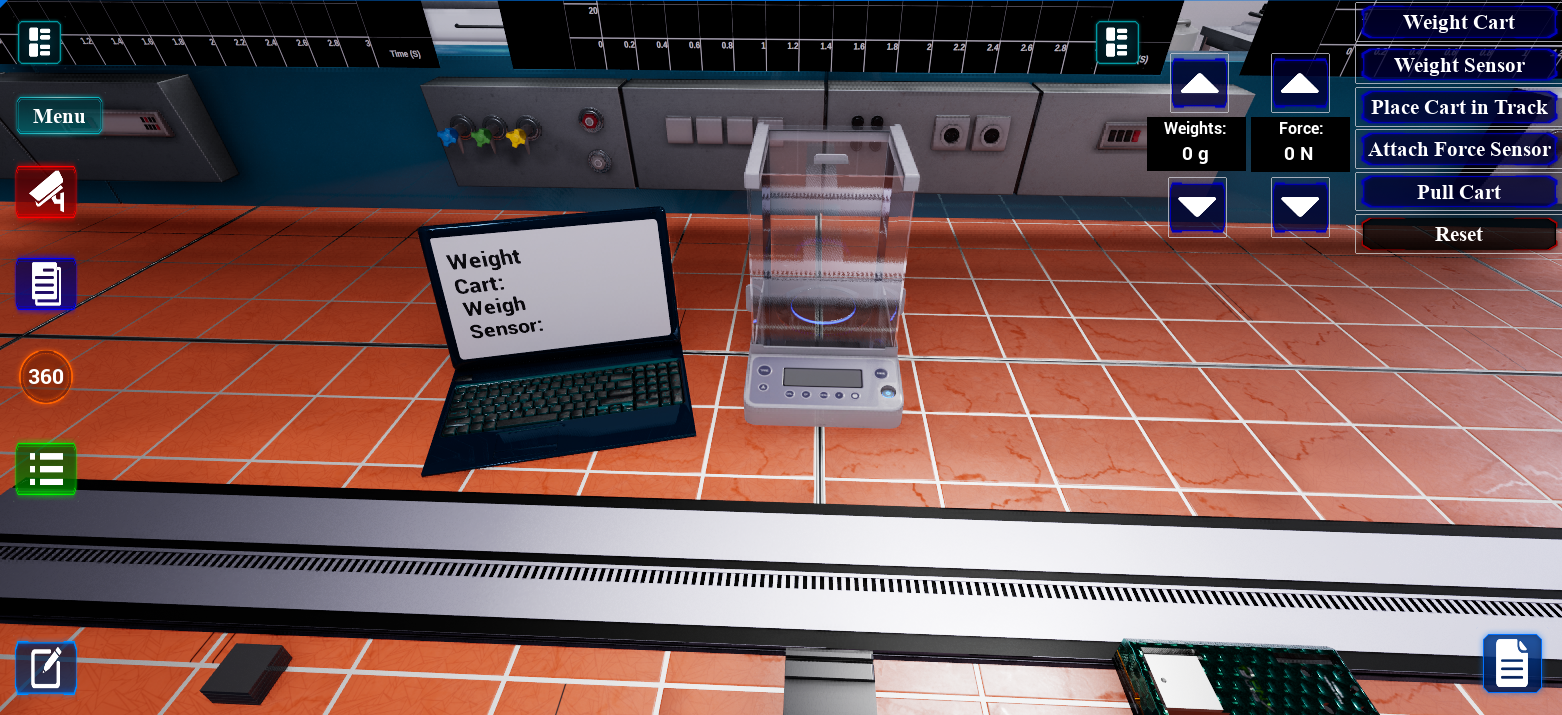
Collect and analyze data just like in a physical laboratory
Unlimited Flexibility
Change variables to replicate scenarios that are impossible in a physical lab